
Seminar / Workshops / Concerts / Publication
The Voice of the Nahḍa
The centenary of Sheikh Yusuf al-Manyalawi · Cairo and Beirut, October 2011
For the centenary of the death of Sheikh Yusuf al-Manyalawi, one of the first great singers to be recorded at the beginning of the twentieth century, AMAR published his near-complete works on 10 CDs, with a book on his life, his era and his art by Muhsen Sawa, the music historian Frédéric Lagrange and Mustafa Said, then AMAR’s director. The work took more than two years.
In October 2011 the centenary was marked with a seminar, workshops and concerts in Cairo and in Beirut. In early June 2012, for the launch of the Manyalawi set in Morocco, the Asil Ensemble gave a concert at the FNAC in Casablanca.

- Cairo
- 17–19 October 2011
Supreme Council of Culture and Arab Music Institute - Beirut
- Saturday 22 October 2011
Pierre Abou Khater Auditorium, Saint Joseph University - Casablanca
- Early June 2012
FNAC, launch of the set in Morocco - On stage
- Asil Ensemble, with Mustafa Said
- Publication
- 10 CDs, 72 recordings, a book in Arabic and two booklets
- In Cairo, with
- Egypt’s Ministry of Culture: National Centre for Theatre, Music and Folk Arts; Foreign Cultural Relations
the year al-Manyalawi died. His records stayed at the top of Gramophone’s sales until 1930.
- 100years since the death of Sheikh Yusuf al-Manyalawi
- 10CDs in the set: his near-complete recordings
- 72recordings restored and digitised in AMAR’s studios
- 3cities: Cairo, Beirut and Casablanca
Three days in Cairo
A seminar, two afternoons of workshops and a concert in the city where al-Manyalawi lived and sang, prepared with Egypt’s Ministry of Culture.
17 Monday October 2011
18:00 Cairo
18 Tuesday October 2011
12:00–18:00 Cairo
19 Wednesday October 2011
20:00 Cairo
The centenary was AMAR’s initiative, carried out with Egypt’s National Centre for Theatre, Music and Folk Arts, then headed by the theatre director Nasser Abdel Moneim, and with the Ministry of Culture’s department of foreign cultural relations. Both appear beside AMAR’s logo on the poster of the concert.
The seminar opened the programme at the Supreme Council of Culture. Its title placed al-Manyalawi where he belongs: in the school of the Nahḍa, the renaissance of Arab music in nineteenth-century Egypt. Two afternoons of workshops on classical Arab music followed in the same hall.
For Nasser Abdel Moneim, the celebration was a unique event for the preservation of Arab music: beyond the seminar and the workshops, it would see the launch of al-Manyalawi’s complete works. On the evening of 19 October the Arab Music Institute, on Ramses Street, hosted a concert of his repertoire and the launch of the set published by AMAR in Beirut.
That year, the National Centre for Theatre, Music and Folk Arts also honoured Kamal Kassar, the founder of AMAR, with a medal and a certificate of appreciation.

The Beirut concert
Three days later, the Asil Ensemble sang al-Manyalawi’s repertoire on the stage where AMAR had given its first concert in 2010.
22 Saturday October 2011
Evening Beirut
Two days before the concert, Kamal Kassar went on MTV’s morning programme Blocnote to present the box set and the evening. The musicians would not be dressing up the past, he said: the concert would take the form of the old waṣla, a sequence in a single maqām that moves from an instrumental opening through muwashshaḥ, mawwāl, taqsīm and dawr to the qaṣīda, to bring back the spirit of classical Arab music, the freedom of the singer and of the player to improvise.
The evening opened with Mustafa Said on the ʿūd in maqām rāst. Fadwa al-Maliki, from Morocco, sang; Ghassan Sahhab played the qānūn; the muwashshaḥ “Lammā badā yatathannā” brought in ʿūd, kamān and nāy. Mustafa Said and Ihab Younes then took turns in the layālī, before two adwār closely tied to al-Manyalawi: “El-bulbul gānī” and “Kādnī el-hawa”, which survives in his own recording.
Reviewing the concert in As-Safir, Safwan Haidar described a hall filled with listeners and connoisseurs, the warm, deep voice of Fadwa al-Maliki and, as the surprise of the evening, the voice of the munshid Ihab Younes in “Lammā badā yatathannā”. In L’Orient-Le Jour, Edgar Davidian called al-Manyalawi the voice of the Nahḍa, the “Caruso of the Orient”.
Fadwa al-Maliki had come to Lebanon for the concert. She told Al Jazeera that the Foundation was a great undertaking: Kamal Kassar, she said, gathers and preserves the musical heritage with no thought of fame or profit.
Casablanca, June 2012
The centenary travelled on. In early June 2012, for the launch of the Manyalawi set in Morocco, the Asil Ensemble gave a concert at the FNAC in Casablanca.
The same stage, 2010
The Pierre Abou Khater Auditorium had already welcomed the Asil Ensemble in February 2010, with the singer Fouad Zabadi, for AMAR’s first concert. An Evening of Tarab
The edition
Ten CDs, a book and two booklets: al-Manyalawi’s near-complete recordings, collected from the original discs and restored in AMAR’s studios.
The Voice of the Nahda Era gathers 72 recordings that al-Manyalawi made for the Sama’ al-Muluk label and for the Gramophone Company. Collected from the original records, they were restored and digitised in AMAR’s studios over more than two years.
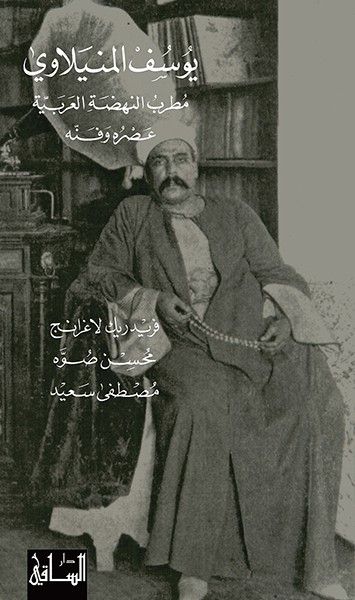
The book, Yusuf al-Manyalawi: Singer of the Arab Nahda, His Era and His Art (Dar al-Saqi, 2011, 320 pages), by Frédéric Lagrange, Muhsen Sawa and Mustafa Said, follows his life, the era and the school he belonged to, and explores the aesthetics of his style. Two shorter booklets present him in French, written by Frédéric Lagrange, and in English, in Nyssa Gregory’s translation.
Kamal Kassar wanted the method to be scientific: even the singer’s birthplace was researched anew, because so many books on the period repeat errors.


The great voices of the Nahḍa
The Manyalawi set opened AMAR’s series of box sets devoted to great artists of the early recordings.
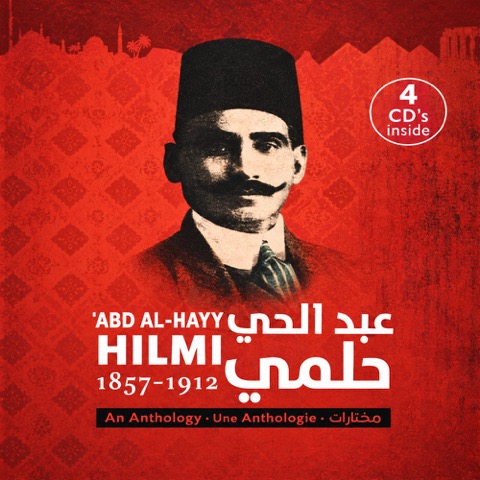 Abd al-Hayy Hilmi
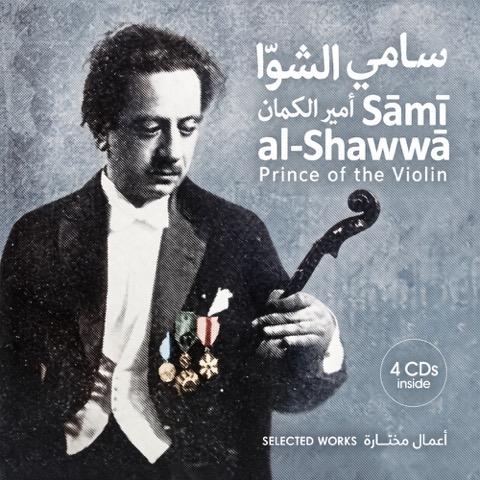 Sami al-Shawwa
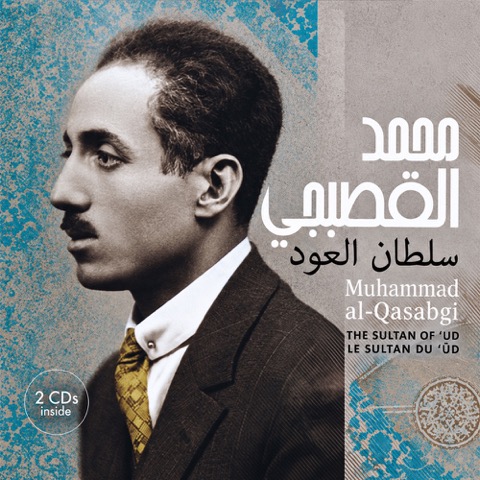 Qasabgi
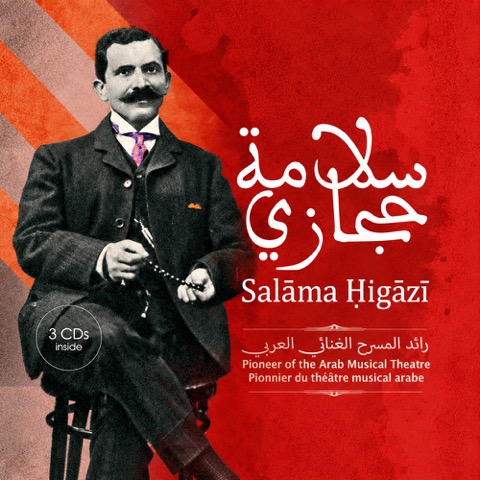 Salama Higazi
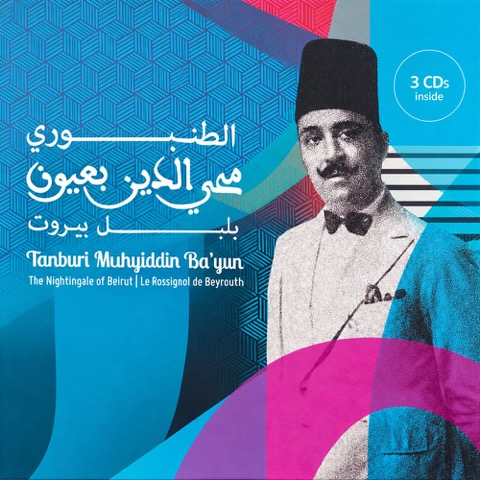 Tanburi Muhyiddin Ba’yun
Listen
Al-Manyalawi’s voice, from the box set: five excerpts, among them “El-bulbul gānī”, sung again in Beirut.
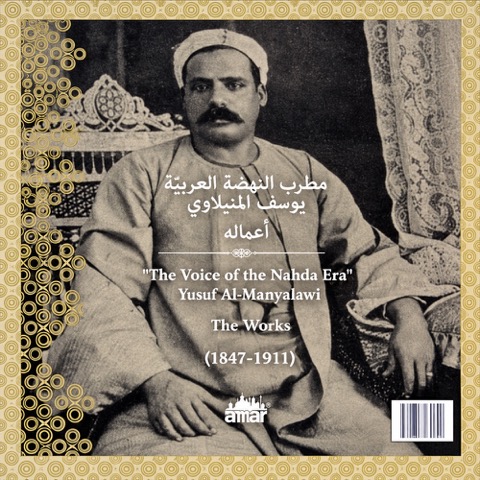
The box set
The Voice of the Nahda Era: Yusuf al-Manyalawi, the works
Recordings from the first decade of the twentieth century, restored in AMAR’s studios.
Sheikh Yusuf al-Manyalawi
A munshid who became one of the great voices of the Nahḍa, and one of the first Arab singers on record.
Al-Manyalawi took his name from Manyal al-Rawḍa, the island on the Nile, now in the heart of Cairo, where he grew up. He was trained in religious chanting, inshād, within a Sufi brotherhood, and moved towards the secular art music of the courts and private circles while keeping the title of sheikh. A friend and rival of ʿAbduh al-Ḥāmūlī, he travelled with him to Istanbul to present the music of Egypt at the Ottoman court.
He did not compose adwār or muwashshaḥāt, but excelled in improvisation, above all in the qaṣīda, with a voice famed for its range and suppleness. Record companies called him the “Caruso of the Orient”. He recorded for Sama’ al-Muluk and then for the Gramophone Company, which kept his discs on sale long after his death in 1911: according to Kamal Kassar, they still outsold Umm Kulthum’s in 1930.
Mustafa Said recalled another side of the singer: during the ʿUrabi revolt, al-Manyalawi hid the writer and activist Abdallah al-Nadim in his house, and his dawr “El-bulbul gānī” spoke of the patriots exiled under the British occupation.

In pictures
The centenary seen from the stage and from the seminar table, in AMAR’s archive.


Timeline
From the singer’s death to the centenary, and what followed in AMAR’s archive.
- CairoDeath of Sheikh Yusuf al-ManyalawiHis records stay at the top of Gramophone’s sales for almost twenty more years.
- LebanonTwo years of workAl-Manyalawi’s discs are collected, restored and digitised, and the book is written.
- BeirutAMAR’s first concertFouad Zabadi and the Asil Ensemble at the Pierre Abou Khater Auditorium. An Evening of Tarab
- CairoThe centenary is announcedThree days of seminar, workshops and concert, and the launch of the complete works.
- CairoThe seminarYusuf al-Manyalawi and the school of the nineteenth-century musical Nahḍa, at the Supreme Council of Culture.
- CairoWorkshopsClassical Arab music, at the Supreme Council of Culture.
- CairoConcert and launchThe complete works of al-Manyalawi are launched at the Arab Music Institute.
- BeirutKamal Kassar on MTVThe box set and the concert, on Blocnote. Watch
- BeirutThe Beirut concertThe Asil Ensemble at the Pierre Abou Khater Auditorium, Saint Joseph University.
- CasablancaThe launch in MoroccoThe Asil Ensemble in concert at the FNAC.
- OnlineThe Manyalawi CaseAMAR publishes the Gramophone Company’s internal letters about the singer. Read the letters
- LebanonThe next voiceA four-CD set devoted to Abd al-Hayy Hilmi follows the Manyalawi edition.
- PodcastMin al-TārīkhThree episodes of Rawdat al-Balabel on al-Manyalawi, with Frédéric Lagrange. Listen
People & partners
The authors of the edition, the musicians on stage and the institutions behind the centenary.
Kamal Kassar
Founder and President of AMAR. He presented the box set and the Beirut concert on Lebanese television, and in 2011 received a medal and a certificate of appreciation from Egypt’s National Centre for Theatre, Music and Folk Arts.
About AMARMustafa Said
Born in Cairo in 1983, the musician and musicologist founded the Asil Ensemble in 2003. Then AMAR’s director, he co-wrote the book and sang and played the ʿūd in Beirut.
His Burda, published by AMARFrédéric Lagrange
A French scholar of Egyptian music of the Nahḍa, born in 1964, who teaches Arabic literature at the Sorbonne in Paris. He co-wrote the book and wrote the French booklet; in 2014 he told al-Manyalawi’s story in AMAR’s podcast.
Min al-TārīkhMuhsen Sawa
Born in Tunis in 1958, he trained in translation and Arabic language and literature, and in 2005 co-founded Zaman al-Wasl, a forum devoted to classical Eastern music.
Asil Ensemble
Founded in 2003 to develop classical Arab music from within its own tradition, the ensemble sang al-Manyalawi’s repertoire in Beirut in October 2011, then played in Casablanca for the launch of the set in Morocco.
Asil in Berlin, 2018The musicians
Ihab Younes and Fadwa al-Maliki sang beside Mustafa Said, with Ghassan Sahhab on the qānūn, Muhammad Antar on the nāy and Rida Bitar on the kamān.
National Centre for Theatre, Music and Folk ArtsEgyptian Ministry of Culture; organiser of the Cairo programme
Foreign Cultural RelationsEgyptian Ministry of Culture; partner of the Cairo programme
Saint Joseph UniversityPierre Abou Khater Auditorium: the Beirut concert
Dar al-SaqiPublisher of the book, Beirut
AMARInitiator of the centenary; the edition and the concerts
Watch & listen
Kamal Kassar on Lebanese television in October 2011, and al-Manyalawi’s voice in AMAR’s archive.
Further listening
- Kamal Kassar on Télé Liban, 2011The Manyalawi edition on the morning programme Ṣabāḥ al-khayr yā Lubnān (YouTube, in Arabic, 23 min)
- Sheikh Yūsuf al-Manyalāwī, Min al-TārīkhThree podcast episodes with Frédéric Lagrange: the man, his mawwāl and his qaṣīda
- Dawr “El-bulbul gānī”The dawr closely tied to al-Manyalawi, sung in Beirut: a podcast episode
- Dawr “Kādnī el-hawa”The other dawr of the Beirut concert, heard in al-Manyalawi’s own recording
- The Manyalawi CaseThe Gramophone Company’s letters about its star singer
Hear al-Manyalawi and the singers of the Nahḍa in Rawdat al-Balabel, AMAR’s podcast on the Arab music archive.
Listen to the podcastPress and sources
The announcement, the reviews and the interviews, in Arabic, French and English.
- Rediscovering Sheikh Youssef Al-ManyalawyAmira Noshokaty, Ahram Online, 19 October 2011 (PDF)
- مئوية المطرب يوسف المنيلاوي في مسرح أبو خاطرSafwan Haidar, As-Safir, 24 October 2011 (Arabic)
- Cheikh Youssef al-Manyalawi, la voix de la NahdaEdgar Davidian, L’Orient-Le Jour, 27 October 2011 (French)
- مؤسسة للتراث الموسيقي العربي بلبنانNiqula Tuʿma, Al Jazeera Net, 22 October 2011 (Arabic)
- مئويَّة يوسف المنيلاويAl-Jarida, 16 October 2011 (Arabic)
- فنانون مصريون وعرب يحتفلون بمئوية يوسف المنيلاويMiddle East Online, in Al-Shorouk, 16 September 2011 (Arabic)
- Blocnote: Kamal KassarMTV Lebanon, 20 October 2011 (video on this page)
- Ṣabāḥ al-khayr yā Lubnān: Kamal KassarTélé Liban, 2011 (YouTube)
- يوسف المنيلاوي: مطرب النهضة العربية، عصره وفنّهDar al-Saqi, 2011: the book (Arabic)
Photographs: AMAR archive. Poster design: Moustafa Awad.
What came next
From the centenary to the archive
After al-Manyalawi, AMAR went on publishing the great voices of the early recordings, from Abd al-Hayy Hilmi to Salama Higazi, and opened its archive to listeners through the podcast and the radio.