Conference / Foundation / Research
The Constitutive Conference
AMAR’s founding conference · Qornet el Hamra, Lebanon · 17–19 August 2009
From 17 to 19 August 2009, AMAR held its constitutive conference at its premises in Qornet el Hamra, in the Metn district of Lebanon.
The conference gathered a number of researchers in order to determine the Foundation’s strategy and its goals, as well as the means to attain them. It led to the decision to create a permanent scientific consulting committee, whose mission would be to supervise the Foundation’s work from a scientific angle. Its members: Jean Lambert (France), Virginia Danielson (USA), Frédéric Lagrange (France), Nidaa Abou Mrad (Lebanon), Lotfi Mraïhi (Tunisia) and Michael Frishkopf (Canada).

- Dates
- 17–19 August 2009
- Venue
- AMAR’s premises, Qornet el Hamra, Metn District, Lebanon
- Founder
- Kamal Kassar
- Participants
- Musicologists and ethnomusicologists from six countries
- Outcome
- A permanent scientific consulting committee
- Public launch
- 16 February 2010, Beirut
researchers named to AMAR’s permanent scientific committee.
- 6countries represented: Canada, France, the USA, Lebanon, Tunisia and Egypt
- 4objectives: conservation, research, education and dissemination
- 5,000records in the collection, mostly of the Nahḍa era, when AMAR went public in 2010
- 6,000hours of early recordings on reels and tapes
The conference
Researchers from six countries met at AMAR’s house to decide what the new foundation would do, and how.
By 2009, Kamal Kassar, a Beirut lawyer and flautist who had been collecting records since his teens, held one of the largest collections of early Arab recordings. At its heart was the Annani collection, assembled in Cairo by the Egyptian historian ʿAbd al-ʿAzīz al-ʿAnānī: thousands of 78 rpm discs of the Nahḍa, the Arab cultural renaissance.
To keep these fragile records from being lost, he set up a studio for their digitization and conservation in Qornet el Hamra, in the hills of the Metn. He also decided that the archive needed an institution, and scholars to guide it.
From 17 to 19 August 2009, musicologists and ethnomusicologists met at the house in Qornet el Hamra. In workshops, they discussed the objectives of the new foundation, its strategy and its technical workflow: how to digitize, conserve, study and publish the recordings.
“The task is too great for one person to carry. That is why we created the Foundation for Arab Music Archiving and Research in Lebanon, in the summer of 2009.”
Kamal Kassar, founder of AMAR, in Al Bayan, 2010
Where the researchers came from
- CanadaUniversity of Alberta
- FranceParis-Sorbonne University (Paris IV) and Paris X Nanterre University
- United StatesHarvard University
- LebanonAntonine University and the Holy Spirit University of Kaslik
- Tunisia and Egypt
- AMARThe host: Kamal Kassar, founder, in whose house the foundation was created
The decision
A permanent scientific committee
The conference’s main decision was to give AMAR a permanent scientific consulting committee, to oversee its work from a scholarly perspective. Six of the researchers were named to it: Jean Lambert, Virginia Danielson, Frédéric Lagrange, Nidaa Abou Mrad, Lotfi Mraïhi and Michael Frishkopf.
They also form AMAR’s Consulting and Planning Board. Several of them spoke at the foundation’s first international conference, in 2010, and Frédéric Lagrange joined its management board.
Meet the committeeSix months before the public
AMAR worked for six months before presenting itself to the public. On 16 February 2010, Kamal Kassar and members of the foundation, among them Nidaa Abou Mrad, presented AMAR at a press conference at the Lebanese Press Syndicate in Beirut. The launch ran through February in the press and the audiovisual media; the foundation published a booklet in Arabic and English, and on 20 February gave its first concert.
The press of that February looked back to the summer: AMAR, it reported, had been created in August 2009 in Kamal Kassar’s house, and launched by a study seminar there, from 17 to 19 August.

Photographs
Working sessions in the house and conversations in the garden, Qornet el Hamra, August 2009.


Aims and plans
What the new foundation set out to do: the aims it registered in 2009 and the programme it presented in 2010.
The statutes, 2009
Five registered aims
AMAR was registered in 2009 as a Lebanese association, notice no. 1296, with its seat in Qornet el Hamra. Its statutes set out five aims:
- To publish and make use of the music library and the archive of Eastern music owned by Kamal Kassar
- To document and publish Eastern musical works
- To study, document and publish the history of music
- To organise seminars and research, educational, cultural and media activities on Eastern music and its musicians
- To foster Arab and international cooperation in these fields
The programme, 2010
Four objectives
The booklet AMAR published for its public launch turned the discussions of the conference into four objectives:
- Conservationof the recorded and printed Arab musical tradition, with state-of-the-art technologies
- Supportof academic research and scientific documentation
- Integrationof these musical traditions and their practices in educational programmes
- Disseminationthrough many media, and public awareness of the Arab music tradition
| Announced in 2010 | What followed |
|---|---|
| A studio to digitize and conserve the collection, at the heart of a documentation and research centre | Digitization began in 2009 in the studio at Qornet el Hamra, and continues today |
| Scientific conferences | “A Hundred Years of Recordings”, with the Antonine University, June 2010 |
| Concerts | An evening dedicated to ṭarab, the first concert, 20 February 2010 |
| CD sets with booklets, starting with the complete recordings of Yūsuf al-Manyalāwī | The ten-CD set of Manyalāwī’s recordings, released in October 2011 for the centenary of his death |
| An internet radio of educational and historical programmes, in the voices of historians, researchers and music lovers | The podcast Rawdat al-Balabel, since March 2013, and AMAR Radio |
| A network of institutions sharing the same interest in Arab music | Partnerships with universities, among them the Holy Spirit University of Kaslik, 2012 |
The scientific committee
The six researchers named by the conference to oversee AMAR’s work, with their positions at the time.

Jean Lambert
Teacher and researcher in anthropology and musicology at the Musée de l’Homme in Paris, he also taught at Paris X Nanterre University. He is a specialist of the song of Sanaa, in Yemen, and has advised UNESCO on intangible heritage.

Virginia Danielson
Ethnomusicologist and music librarian at Harvard, where she was curator of the Archive of World Music and Loeb Music Librarian. She wrote The Voice of Egypt: Umm Kulthum, Arabic Song, and Egyptian Society in the Twentieth Century (1997).

Frédéric Lagrange
Director of the Department of Arabic and Hebrew Studies at Paris-Sorbonne (Paris IV). His doctorate studied musicians and poets in Egypt in the time of the Nahḍa; he is the author of Musiques d’Égypte (1996). He is also a member of AMAR’s management board.
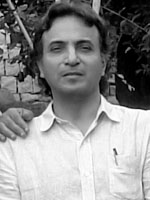
Nidaa Abou Mrad
Violinist, composer and musicologist, and a doctor of medicine. He directed the Higher Institute of Music at the Antonine University and edited the Revue des Traditions Musicales des Mondes Arabe et Méditerranéen.
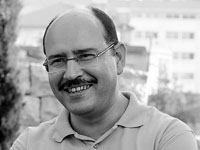
Lotfi Mraïhi
A Tunisian doctor whose passion for music led him to study its history. He wrote books on religious cantillation and on Shaykh Amīn Ḥasanayn, produced music programmes for Tunisian radio and directed three annual festivals.
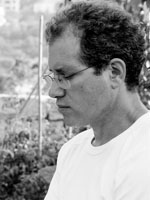
Michael Frishkopf
Ethnomusicologist and composer, associate professor of music at the University of Alberta. His research covers Sufi music, the Arab music industry, sound in Islamic ritual and digital music repositories.
Timeline
From the conference to the public launch, and the first projects it prepared.
- LebanonAMAR is registeredAs a Lebanese association, notice no. 1296, with its seat in Qornet el Hamra. Digitization of the records begins in its studio.
- Qornet el HamraThe constitutive conferenceResearchers from six countries set AMAR’s objectives, strategy and technical workflow, and create its permanent scientific committee.
- Qornet el HamraA hall for eighty peopleAMAR builds a multi-purpose hall at its premises.
- BeirutPublic launchKamal Kassar presents AMAR at a press conference at the Lebanese Press Syndicate, at the heart of a month-long campaign in the press and the audiovisual media.
- Abu Khater TheatreThe first concertAn evening dedicated to ṭarab, with Fouad Zabadi and the Asil Ensemble led by Mustafa Said, closes the launch campaign.
- Antonine UniversityA Hundred Years of RecordingsAn international conference with the Antonine University; its second day is held at AMAR. Frédéric Lagrange and Jean Lambert are among the speakers, and Nidaa Abou Mrad conducts the closing concert.
- Cairo · BeirutThe Manyalāwī centenaryAMAR releases the complete recordings of Yūsuf al-Manyalāwī on ten CDs, its first CD set.
- KaslikAgreement with the Holy Spirit University of KaslikAMAR is to digitize the University’s sound archives of Eastern music, and opens its own archive to the University’s researchers.
- OnlineRawdat al-BalabelThe first episode of AMAR’s podcast on the history of Arab music.
Press and sources
How the press reported AMAR’s launch in 2010, and the records of its founding.
«أمانة… وعليّ ان أصونها وأقدمها نظيفة، وأتركها للأجيال»
“A trust… and I must safeguard it, hand it on clean, and leave it to the generations.”
« Nous sommes fiers d’être une sorte de gardiens de la mémoire musicale. »
“We are proud to be guardians, of a kind, of musical memory.”
«يؤرخ لقرن من الموسيقى العربية»
“It chronicles a century of Arab music”
- «قمر» تملك أكبر مكتبة موسيقية عربية في العالمInaya Jaber, As-Safir, 17 February 2010, issue 11520 (Arabic)
- Amar se penche sur la musique traditionnelle arabeC. K., L’Orient-Le Jour, 20 February 2010 (French)
- كتاب «مؤسسة التوثيق والبحث» يؤرخ لقرن من الموسيقى العربيةSahar Taha, Al-Mustaqbal, 14 April 2010, issue 3623 (Arabic, PDF)
- كمال قصار يُطلق أكبر مكتبة للموسيقى العربيةYasmina al-Khazen, Al Bayan, 2010 (Arabic)
- جمعية باسم «مؤسسة التوثيق والبحث في الموسيقى العربية»Lebanon Knowledge and Development Gateway: AMAR’s registration, notice no. 1296, 2009 (Arabic)
- مؤسسة للتراث الموسيقي العربي بلبنانNicolas Tohme, Al Jazeera, 22 October 2011 (Arabic)
- About AMARThe Foundation, its objectives and the Consulting and Planning Board
- An evening dedicated to ṭarabAMAR’s first concert, Abu Khater Theatre, Beirut, 20 February 2010
What came next
From Qornet el Hamra to Beirut
Six months after the conference, AMAR presented itself to the public: a press conference in Beirut on 16 February 2010, then its first concert, an evening dedicated to ṭarab, four days later.